
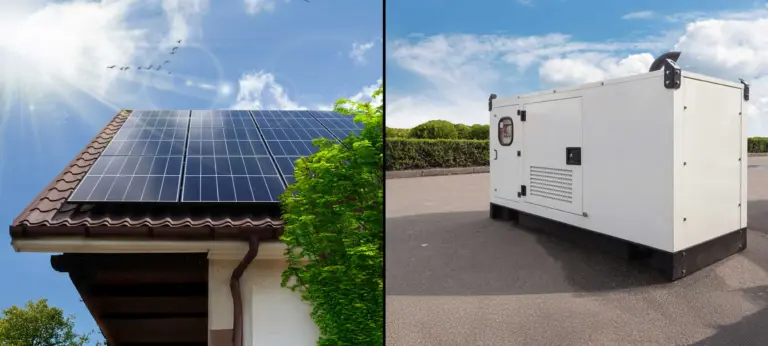


When a storm knocks out power for two or three days, the question stops being theoretical. The U.S. Energy Information Administration has reported that the average American customer loses electricity for several hours a year, but that figure hides the outliers—the multi-day outages after hurricanes and ice storms that push homeowners to look for real backup. The two usual answers are a standby generator or a battery. They solve the same problem in very different ways.
How each one actually keeps the lights on
A standby generator is a fuel-burning engine wired to the electrical panel. When the grid drops, it starts up—usually within 10 to 30 seconds—and runs on natural gas, propane, or diesel until the power comes back or the tank runs dry.
A battery system stores electricity, most often paired with rooftop solar so it can refill during the day. Modern residential units use lithium iron phosphate (LFP) chemistry, a battery type valued for its thermal stability and long cycle life. Because there’s no engine to spin up, a well-designed setup transfers to backup almost instantly. Products like the Sigen LoadHub, for example, switch over in about zero milliseconds and can be configured for whole-home or selected-circuit backup, so sensitive electronics never even notice the outage.
That switchover gap matters more than people expect. A generator’s brief delay means computers reboot and medical devices blink off; a battery bridges it seamlessly.
Runtime, fuel, and the multi-day question
This is where generators still hold an edge for the longest outages. A generator tied to a natural gas line can theoretically run for days, as long as the utility keeps gas flowing. That makes it a strong choice in regions with frequent, prolonged blackouts and reliable fuel supply.
Batteries are limited by their stored capacity—unless the sun is out. A stackable system built from LFP modules, such as Sigen’s BAT 6.0 and BAT 9.0 packs, can scale to roughly 54 kWh per stack, enough to carry an efficient home through a night and recharge the next day. The National Renewable Energy Laboratory has noted that solar-plus-storage systems perform best where daytime generation can consistently top off the battery. In cloudy climates or during week-long overcast stretches, that recharge slows down.
The trade-off comes into focus here: a generator offers near-unlimited runtime but depends on fuel deliveries and produces emissions and noise, while a home solar battery storage system runs silently, needs no refueling, and does useful work every single day—not just during emergencies.
Cost over time, not just up front
Generators often look cheaper at purchase, but the comparison shifts across a decade. BloombergNEF has tracked steady, long-term declines in lithium battery pack prices, which has narrowed the gap considerably. Batteries also earn their keep between outages: they store cheap off-peak power, shave expensive demand charges, and let households use more of their own solar. An integrated unit like the SigenStor—which folds a hybrid inverter, battery, and energy management into one enclosure—can also feed an EV charger, adding value a generator simply can’t match.
Generators, by contrast, need oil changes, load testing, and fuel that isn’t free. According to the International Energy Agency, the falling cost of storage is a key driver behind rising residential adoption worldwide.
So which one wins?
There’s no universal answer. A generator makes sense for someone facing frequent multi-day outages with dependable gas service and no interest in solar. A battery makes more sense for households that want silent, instant, low-maintenance backup that also cuts electricity bills year-round—and that already have, or plan to add, solar panels.
For anyone leaning toward the battery route, comparing how the inverter, storage, backup switch, and EV charging tie together in one ecosystem is a sensible next step before choosing a system.